Few failures in industrial environments carry consequences as severe as a breakdown in lockout and tagout procedures. A momentary oversight—failing to isolate a power source, misreading a tag, or bypassing a safety step—can lead to amputations, electrocution, or fatalities. These aren’t hypotheticals. OSHA estimates that proper lockout/tagout (LOTO) safeguards prevent 120 deaths and 50,000 injuries annually in the U.S. alone. Yet, violations consistently rank among the top 10 most cited standards. This isn’t about paperwork—it’s about protecting lives with repeatable, reliable procedures.
What Are Lockout and Tagout Procedures?
Lockout and tagout are complementary safety measures used to disable machinery or equipment during maintenance or servicing. Together, they form an energy control strategy designed to prevent the unexpected startup of equipment or the release of stored energy.
Lockout involves physically securing an energy-isolating device—like a circuit breaker, valve, or disconnect switch—with a lock. Only the authorized employee who applied the lock can remove it, ensuring control remains with the individual performing the work.
Tagout, while often used alongside lockout, relies on a warning tag attached to the energy source. It signals that equipment is unsafe to operate and identifies the worker responsible. However, because tags can be removed more easily than locks, they’re considered less secure and are typically used only when lockout isn’t feasible.
The Critical Difference Between Lockout vs. Tagout
While the terms are often used interchangeably, they’re not equal in safety assurance.
- Lockout: Physically prevents activation. Provides a higher level of control.
- Tagout: Warns against activation. Relies on human compliance.
OSHA permits tagout-only use only when an employer can demonstrate that lockout isn’t possible and the tagout program provides full protection. In most industrial settings, lockout is the standard; tagout is the exception.
Why LOTO Procedures Matter Beyond Compliance
Yes, OSHA 29 CFR 1910.147 mandates energy control procedures. But adherence isn’t just about avoiding $15,000+ citations. The real value lies in creating a culture where safety is procedural, not situational.
Consider a real-world scenario: A maintenance technician begins clearing a jammed conveyor belt. The machine appears off, but a colleague restarts it remotely, unaware of the ongoing repair. The result: a crushed hand. This type of incident is preventable with proper LOTO.
LOTO procedures eliminate ambiguity. They provide: - Clear accountability (one person, one lock) - Verified energy isolation - Documentation of steps taken - A methodical return-to-service process
When followed consistently, these protocols reduce near-misses, boost worker confidence, and increase operational efficiency by reducing unplanned downtime caused by accidents.
The 6 Standard Steps in Lockout/Tagout Procedures
Effective LOTO isn’t a single action—it’s a sequence. Deviate from the order, and risk increases. Here are the universally accepted steps:
1. Prepare for Shutdown Identify all energy sources (electrical, hydraulic, pneumatic, thermal, chemical, gravitational) associated with the equipment. Review the site-specific LOTO procedure. Gather necessary locks, tags, and tools.
Common mistake: Assuming equipment has only one energy source. A press, for instance, may have electrical power, pneumatic lines, and stored hydraulic pressure.
2. Notify Affected Personnel Alert all employees who operate or work near the equipment that maintenance is about to begin. This prevents confusion and reduces the chance of someone attempting to use the machine.
3. Shut Down the Equipment Use normal stopping procedures—don’t rely on emergency stops as isolation methods. Confirm the machine has stopped completely.
4. Isolate Energy Sources Turn off and disconnect all energy isolating devices. This includes flipping breakers, closing valves, blocking moving parts, and bleeding pressure lines.
Practical tip: Use lockout hasps or multi-lock brackets when multiple workers are involved. Each technician applies their own lock.
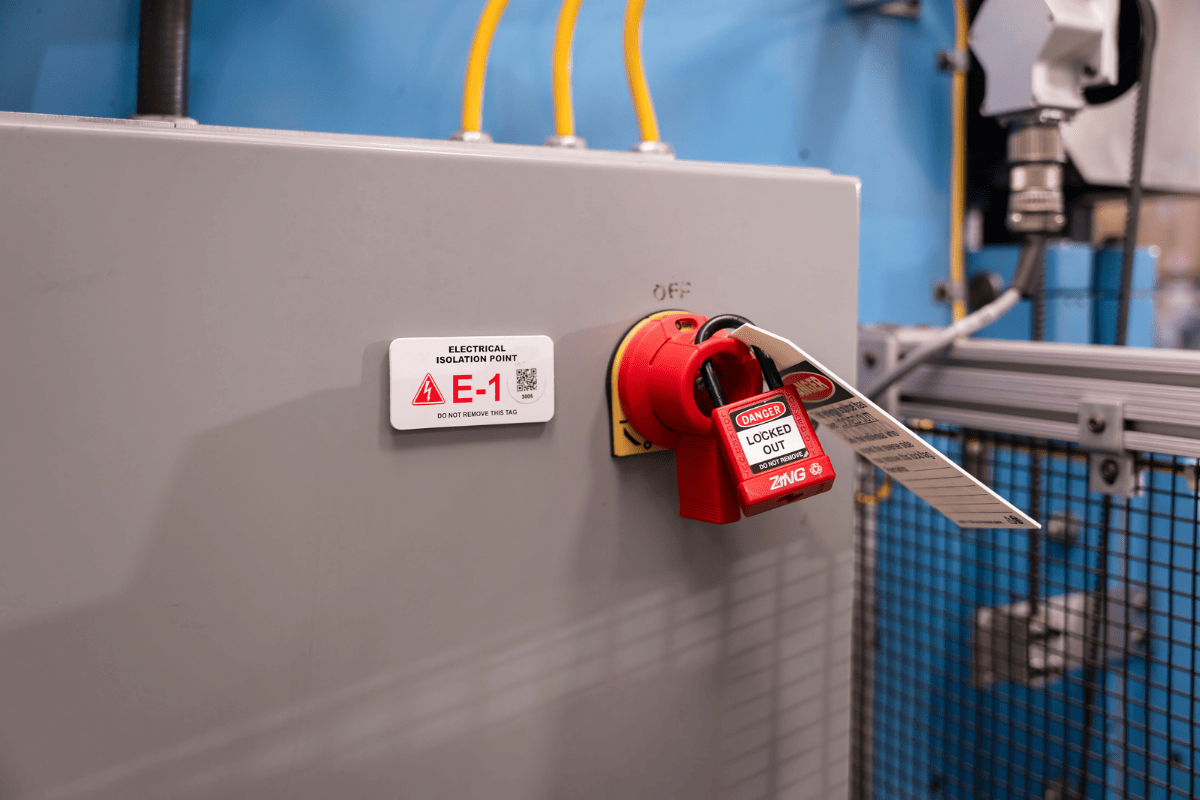
5. Apply Locks and Tags Attach your personal lock and tag to each energy point. Tags must include: - Employee name - Date and time - Reason for lockout - Department or work group
Never share locks or use master keys. Personal locks only.
6. Release Stored Energy and Verify Isolation
This is often the most overlooked step. Stored energy—like a tensioned spring, pressurized line, or capacitive charge—can be deadly even after power is cut.
- Bleed air lines
- Drain fluids
- Ground circuits
- Allow rotating parts to coast to a stop
Then, attempt to restart the equipment using normal controls—without re-energizing. If it doesn’t start, isolation is confirmed. Return controls to “off” or “neutral” afterward.
Real-World LOTO Failures and Lessons Learned
Case 1: The Unlabeled Valve A technician locked out a pump’s electrical supply but failed to isolate a pressurized nitrogen line. When he opened a housing to inspect seals, residual pressure caused an explosion. The root cause? Incomplete energy source identification and lack of verification.
Lesson: Always use a documented energy control checklist specific to each machine.
Case 2: The Shared Lock A supervisor used a single lock for a team servicing a conveyor. One worker removed the lock early, thinking the job was done. Another was still inside the guard. The machine started. Result: severe leg injury.
Lesson: Each worker must apply their own lock. Group lockout boxes are acceptable; shared locks are not.
These aren’t edge cases. They reflect common gaps in training and procedure execution.
Common Challenges and How to Overcome Them
Even well-intentioned LOTO programs face hurdles. Addressing them proactively strengthens compliance.
Challenge: Time Pressure During Maintenance Workers may bypass LOTO to meet production deadlines. This is especially common in fast-paced environments like packaging lines or automotive assembly.
Solution: Build LOTO time into maintenance scheduling. Emphasize that skipping steps costs more in downtime and risk than saving a few minutes.
Challenge: Inadequate Training Annual refreshers aren’t enough if they’re generic. Employees need equipment-specific training.
Solution: Conduct hands-on drills. Use mock lockouts on decommissioned machines. Require sign-offs for each piece of equipment an employee services.
Challenge: Complex or Multi-Energy Equipment Some machinery—like industrial ovens or robotic cells—has multiple energy types and isolation points.
Solution: Develop detailed LOTO procedures with diagrams. Include photos of lock points and flowcharts for energy isolation sequences.
Equipment and Tools for Effective LOTO
While the procedures are standardized, the tools vary by environment. Using the right hardware ensures reliability and compliance.
Here’s a list of essential LOTO tools:
| Tool | Purpose | Example Use Case |
|---|---|---|
| Lockout Hasp | Allows multiple locks on one isolation point | Three technicians working on a motor control center |
| Valve Lockout | Secures open or closed valves | Isolating steam lines before boiler maintenance |
| Circuit Breaker Lockout | Prevents breaker reactivation | Servicing electrical panels |
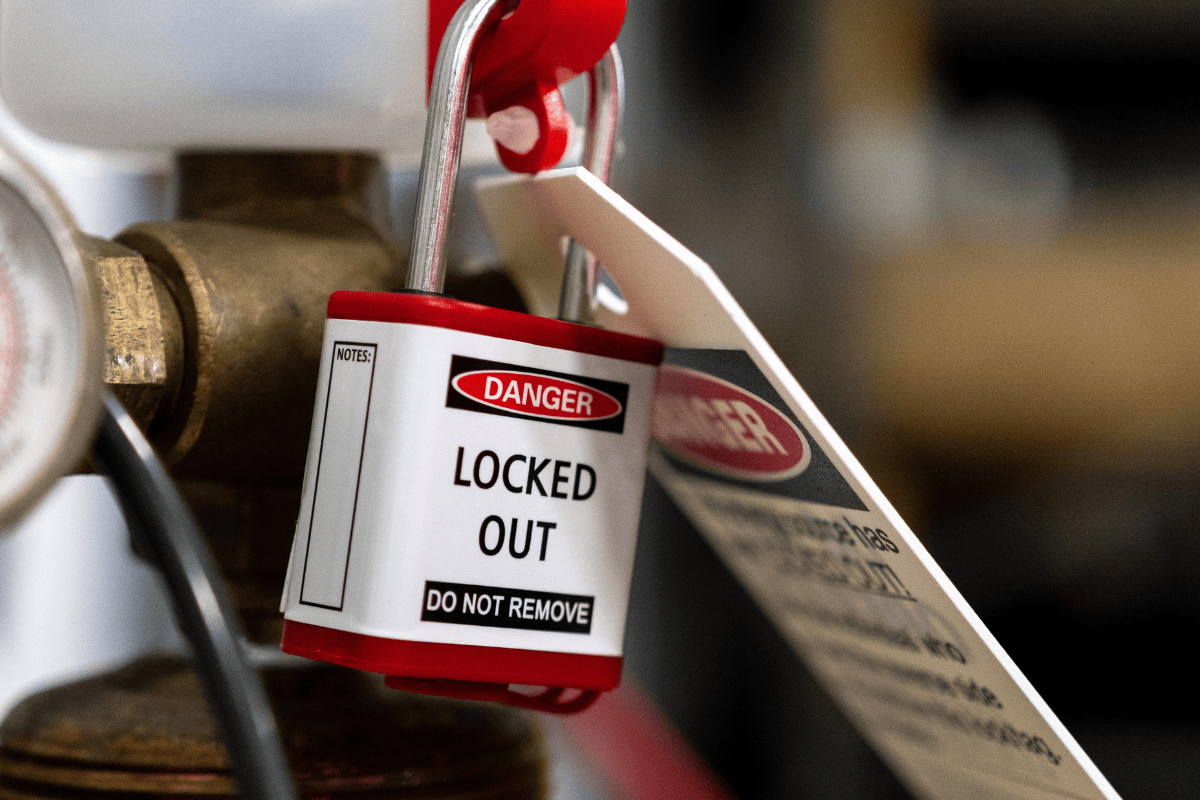
| Padlocks with Unique Keys | Ensures personal accountability | Each worker uses their own keyed-alike or keyed-different lock |
| Tagout Tags (Durable) | Provides clear warnings and ownership | Used where locks can’t be applied, with strict controls |
Invest in high-quality, tamper-resistant materials. Cheap plastic tags fade; flimsy locks can be cut. Your LOTO tools are part of your safety infrastructure—treat them as such.
Building a Sustainable LOTO Program
A one-time rollout won’t create lasting change. A sustainable LOTO program includes:
- Written Procedures: One for each machine or energy system, accessible at the point of use.
- Authorized vs. Affected Employee Training: Distinguish between those performing LOTO (authorized) and those operating equipment (affected).
- Periodic Inspections: Conducted at least annually, where a supervisor reviews procedures with a worker to ensure adherence.
- Audits and Observations: Use checklists to assess real-world compliance during maintenance events.
- Continuous Improvement: Gather feedback from technicians. Update procedures when equipment changes.
One manufacturing plant reduced LOTO deviations by 78% in 18 months simply by adding visual LOTO flowcharts near each machine and holding monthly safety huddles focused on energy control.
Returning Equipment to Service: The Final Step
Re-energizing equipment is as critical as shutting it down. Rushing this phase causes accidents.
- Follow this sequence:
- Confirm all tools are removed and guards are reinstalled.
- Ensure all workers are clear of the equipment.
- Remove locks and tags—only by the person who applied them.
- Re-energize systems in reverse order of shutdown.
- Notify affected personnel that the machine is operational.
Never re-energize while someone is still adjusting components. Use a “clear the area” verbal check if necessary.
Closing: Make LOTO a Non-Negotiable Standard
Tagout and lockout procedures aren’t bureaucratic checkboxes—they’re the backbone of industrial safety. The difference between a routine repair and a life-altering injury often comes down to whether someone took the time to lock a valve, tag a breaker, and verify isolation.
Implement standardized procedures. Train relentlessly. Audit consistently. And never allow production pressure to erode safety discipline. When every employee treats LOTO as mandatory, not optional, you don’t just comply with OSHA—you build a workplace where people go home unharmed, every day.
What is the primary purpose of lockout/tagout procedures? To control hazardous energy and prevent unexpected startup of machinery during maintenance.
Can tagout be used instead of lockout? Only when lockout is not feasible, and the tagout program provides equivalent protection. Lockout is always preferred.
Who is responsible for applying a lockout device? The authorized employee performing the service must apply and remove their own lock.
How often should LOTO procedures be inspected? At least annually, and whenever equipment or processes change.
What counts as hazardous energy in LOTO? Electrical, mechanical, hydraulic, pneumatic, chemical, thermal, and gravitational energy sources.
Do all employees need LOTO training? Affected employees (who operate equipment) need awareness training; authorized employees (who service it) need full procedural training.
What should a tagout tag include? Worker’s name, date, time, reason for lockout, and contact information.
FAQ
What should you look for in Mastering Tagout and Lockout Procedures for Workplace Safety? Focus on relevance, practical value, and how well the solution matches real user intent.
Is Mastering Tagout and Lockout Procedures for Workplace Safety suitable for beginners? That depends on the workflow, but a clear step-by-step approach usually makes it easier to start.
How do you compare options around Mastering Tagout and Lockout Procedures for Workplace Safety? Compare features, trust signals, limitations, pricing, and ease of implementation.
What mistakes should you avoid? Avoid generic choices, weak validation, and decisions based only on marketing claims.
What is the next best step? Shortlist the most relevant options, validate them quickly, and refine from real-world results.