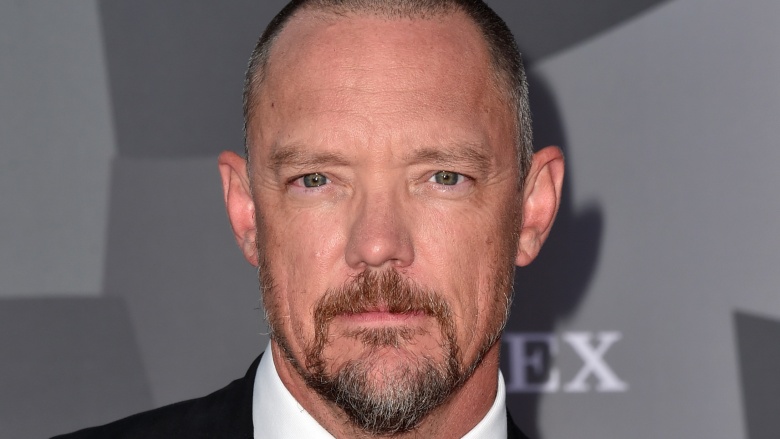
:max_bytes(150000):strip_icc():focal(801x261:803x263)/Matthew-Lillard-paramount-event-102425-a13882f0fc524685bbb840985e4e9563.jpg)
Hollywood doesn’t just recycle ideas—it recycles faces. And few actors embody this cycle better than Matthew Lillard. Known for his fast-talking charisma, nervous energy, and an unmistakable voice that ricochets off walls, Lillard hasn’t just survived in the industry—he’s thrived. But his secret weapon isn’t just talent. It’s nostalgia.
Lillard himself has admitted that he believes nostalgia is the primary force keeping him employed. Whether it’s reprising Shaggy in animated Scooby-Doo projects or stepping back into the shoes of Stu Macher in the new Scream films, his roles are deeply rooted in the cultural memory of audiences. But there's more beneath the surface: a strategic alignment between personal brand, audience connection, and Hollywood’s obsession with the past.
Let’s unpack why Matthew Lillard isn’t just a product of nostalgia—but a master of it.
The Nostalgia Cycle: How Hollywood Recruits the Past
Nostalgia isn’t a side effect of Hollywood’s creative drought. It’s a business model.
Studios bank on built-in recognition. Reboots, sequels, and legacy casts reduce marketing risk. When audiences see a familiar face, especially one tied to a beloved project, engagement spikes. They don’t need to be sold on the character—they’re already invested.
Matthew Lillard gets this. He’s not resentful about being tied to his 90s and early 2000s roles. Instead, he leans into them—strategically.
“I think the reason Hollywood keeps hiring me is because people remember me,” Lillard once said in an interview. “They remember Stu from Scream. They remember me as Shaggy. That nostalgia—it opens doors.”
That honesty is rare. Many actors fight to escape typecasting. Lillard does the opposite: he reclaims it, reframes it, and turns it into longevity.
From Scream to Shaggy: The Roles That Won’t Let Go
Two characters define Lillard’s career in the public eye: Stu Macher and Shaggy Rogers.
Stu, the manic horror-movie buff from Wes Craven’s 1996 Scream, was a standout in a film stacked with future stars. His performance was so memorable—equal parts funny, unsettling, and unpredictable—that when the franchise revived decades later, fans demanded his return.
And they got it. Through flashbacks, hallucinations, and meta-commentary, Stu reappeared in Scream (2022) and Scream VI (2023). Lillard wasn’t just brought back for a cameo—he was woven into the narrative psyche of the new films.
Then there’s Shaggy.
Lillard didn’t originate the character, but after taking over the voice role in 2002, he made it his own. His loose, improvisational delivery—often stretching “Zoinks!” into a three-syllable panic attack—became the new Shaggy. He voiced the character in nearly two dozen projects, from direct-to-video films to the Scooby-Doo live-action movies.
Unlike other actors who might resist such a cartoonish association, Lillard embraced it. He appeared at fan conventions, joked about his vocal cords being insured, and even launched a coffee brand under the “Shaggy” persona—What’s New Scooby-Doo Roast.
This isn’t just acceptance. It’s branding.
Why Nostalgia Works for Lillard—And Not Everyone
Not every actor benefits from nostalgia. For some, it’s a cage. So why does it work so well for Lillard?

First, authenticity. He doesn’t perform nostalgia—he participates in it. When he shows up at a Scream panel or voices Shaggy with the same manic energy from 20 years ago, it doesn’t feel forced. It feels like he’s having fun.
Second, versatility within the typecast. While Stu and Shaggy are wildly different—one a psychopath, the other a cowardly stoner—they’re both high-energy, talkative, and emotionally volatile. Lillard isn’t playing against type; he’s refining a niche.
And third, timing. The 2020s are peak nostalgia era. Millennials now hold creative and financial power in entertainment, and they’re drawn to the icons of their youth. Scream and Scooby-Doo aren’t just IP—they’re emotional anchors.
Lillard isn’t chasing trends. He’s a trend Hollywood keeps rediscovering.
The Business of Being Remembered
Lillard’s career offers a blueprint for actors navigating an industry that values recognition over range.
Consider this: after Scream, Lillard had a solid run in the late 90s and early 2000s—SLC Punk!, Wing Commander, Without a Compass. But mainstream momentum faded. Instead of fading out, he adapted.
He shifted to voice work, indie films, and TV guest spots. He stayed visible without overexposing himself. When nostalgia cycled back, he was ready.
His return to Scream wasn’t just a callback—it was a calculated re-entry. The filmmakers knew bringing back Stu would spark conversation. And it did. Social media lit up. Critics noted his scene-stealing presence. Suddenly, Lillard wasn’t just a 90s relic—he was relevant.
This isn’t accidental. It’s the result of staying connected to the audience, understanding cultural rhythm, and knowing when to reemerge.
Nostalgia vs. Reinvention: Can You Do Both?
Some actors spend careers trying to escape their most famous roles. Kiefer Sutherland still battles Jack Bauer comparisons. Elijah Wood can’t walk into a room without someone shouting “Frodo!”
Lillard could’ve gone that route. Instead, he made a different choice: coexist.
He doesn’t deny Shaggy or Stu. He celebrates them—while still pursuing new work. He’s directed films (Fat Kid Rules the World), acted in thrillers (The Caller), and taken dramatic roles (I Know This Much Is True with Mark Ruffalo).
But here’s the key: he lets his nostalgic roles fund and amplify the others.
When he shows up as Shaggy on a podcast or plays Stu in a horror teaser, it reminds people he’s still active. That awareness trickles into his lesser-known projects. It’s cross-promotion through cultural memory.
The Limitations of Nostalgia
Nostalgia isn’t a golden ticket. It has limits.
For one, it can cap an actor’s range. Studios may only see Lillard as “that guy from Scream” or “the voice of Shaggy”—not as a dramatic lead or romantic interest.
Second, nostalgia fades. Millennials age. Gen Z may not care about Scream (1996) or 2002’s Scooby-Doo movie. Without new hits, even the strongest nostalgic pull weakens.
And third, overexposure kills magic. Too many reunions, too many reboots, too many Shaggy coffee drops—and the brand can feel gimmicky.
Lillard seems aware of this. He’s careful with appearances. He rarely overplays his hand. He treats nostalgia like a currency—spend it wisely, save it for impact.
How Lillard Turns Nostalgia Into Longevity
So what’s the takeaway? How does one leverage nostalgia without being consumed by it?
Lillard’s strategy includes:
- Owning the role, not being owned by it
- He jokes about Shaggy but doesn’t let it define his self-worth. He brings Stu back with irony and self-awareness.
- Staying creatively active outside nostalgia lanes
- Directing, producing, and taking varied roles keep him growing—even if they don’t get headlines.
- Engaging authentically with fans
- He shows up to conventions, interacts online, and thanks people for remembering him. That goodwill translates to lasting support.
- Timing comebacks with cultural momentum
- He didn’t force a Shaggy return in 2010. He waited until pop culture was ripe—then struck.
It’s a delicate balance. But Lillard walks it better than most.
The Future of Nostalgia in Hollywood
Lillard’s story isn’t just personal—it’s predictive.
As franchises lean harder on legacy characters (Indiana Jones, Jurassic Park, Star Wars), more actors will face the same choice: resist nostalgia or ride it.
Lillard’s approach offers a third path: partner with it.
Hollywood will keep hiring him not just because people remember Stu or Shaggy—but because he knows how to make those memories matter now.
He’s not stuck in the past. He’s keeping it alive.
And in an industry where attention spans are short and reinvention is constant, that’s a rare superpower.
Final Thought: Nostalgia isn’t just emotion—it’s equity. Matthew Lillard didn’t wait for Hollywood to remember him. He made sure they never forgot. If you’re building a personal brand in any creative field, ask: What do people remember about you? And how can you make that memory valuable—today?
FAQ
Why does Matthew Lillard keep getting cast in Scream movies? He’s brought back due to audience nostalgia for his iconic role as Stu Macher. His performance left a lasting impression, making his return a powerful emotional and marketing tool for the franchise.
Is Matthew Lillard still the voice of Shaggy? Yes, he has been the primary voice of Shaggy since 2002 and continues to voice the character in new projects, including animated series and commercials.
Did Matthew Lillard want to escape being typecast? Unlike many actors, he embraced his typecasting. He’s acknowledged that nostalgia helps his career and uses those roles as a platform for other creative work.
What other major roles has Matthew Lillard played? He’s known for SLC Punk!, Hackers, The Descendants, and I Know This Much Is True. He also directed the critically acclaimed film Fat Kid Rules the World.
How has nostalgia affected younger audiences’ view of Lillard? While Gen Z may not know his early work, the revival of Scream and ongoing Scooby-Doo content keeps his characters relevant through streaming and social media.
Can nostalgia alone sustain an acting career? Rarely. But when paired with authenticity, adaptability, and smart career choices—like Lillard’s—it can create long-term opportunities.
Does Matthew Lillard profit from Shaggy beyond voice acting? Yes. He launched a coffee brand called What’s New Scooby-Doo Roast, leveraging the Shaggy persona into a real-world product with fan appeal.
FAQ
What should you look for in Matthew Lillard on Why Nostalgia Keeps Him in Hollywood? Focus on relevance, practical value, and how well the solution matches real user intent.
Is Matthew Lillard on Why Nostalgia Keeps Him in Hollywood suitable for beginners? That depends on the workflow, but a clear step-by-step approach usually makes it easier to start.
How do you compare options around Matthew Lillard on Why Nostalgia Keeps Him in Hollywood? Compare features, trust signals, limitations, pricing, and ease of implementation.
What mistakes should you avoid? Avoid generic choices, weak validation, and decisions based only on marketing claims.
What is the next best step? Shortlist the most relevant options, validate them quickly, and refine from real-world results.