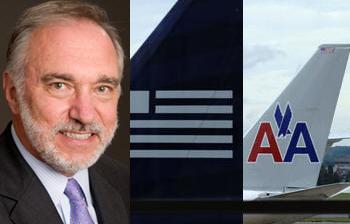
When United Airlines CEO Scott Kirby publicly criticized American Airlines for refusing merger discussions, it wasn’t just corporate posturing—it was a strategic signal wrapped in frustration. Behind the sharp rhetoric lies a deeper narrative about industry consolidation, competitive imbalance, and the future of U.S. air travel. Kirby’s remarks, delivered during a quarterly earnings call and later echoed in media interviews, expose a growing rift between two of the nation’s biggest carriers.
This isn’t the first time merger speculation has swirled around American and United. But what makes this moment different is the uncharacteristic public rebuke from Kirby—typically measured and diplomatic. His comments suggest that United sees consolidation as not just beneficial, but necessary to compete in an evolving market shaped by shifting demand, labor pressures, and international competition.
Why United Wanted the Merger
United’s push for a merger with American Airlines is rooted in structural challenges facing legacy carriers. Despite strong recovery in passenger demand post-pandemic, airlines face rising fuel costs, tighter labor markets, and increasing pressure from low-cost competitors like Southwest and Frontier.
A merger would have created a behemoth with over 100,000 employees and a combined fleet exceeding 1,800 aircraft. More importantly, it would consolidate route networks, reduce redundancies in operations, and increase negotiating power with airports, manufacturers, and labor unions.
Scott Kirby argued that the combined airline could offer better service, more nonstop routes, and improved loyalty benefits. “We could deliver more value to customers, better outcomes for employees, and stronger returns for shareholders,” Kirby said. “Refusing to even talk is short-sighted.”
But beyond public statements, United likely sees long-term defensive value. With Delta and American already operating deep international joint ventures, and Delta solidifying dominance in key hubs like Atlanta and New York, United risks being outmaneuvered without a major strategic shift. A merger would rebalance that power.
American Airlines’ Stance: Independence Over Integration
American Airlines’ leadership, led by CEO Robert Isom, has consistently rejected merger overtures. Their argument centers on confidence in their standalone strategy. Since emerging from bankruptcy in 2013 and merging with US Airways in 2015, American has focused on operational reliability, fleet modernization, and premium product upgrades.
Isom stated, “We believe we’re strongest as an independent carrier.” He pointed to improvements in on-time performance, new aircraft deliveries, and expansion in key international markets as evidence that American doesn’t need a merger to succeed.
But skepticism remains. Critics argue that American still trails Delta and United in customer satisfaction metrics and investor confidence. Its stock has underperformed compared to United’s over the past three years. And while it has invested in premium cabins and lounges, execution has been inconsistent—particularly during the 2022 holiday travel crisis that saw tens of thousands of flights canceled.
By refusing to engage in talks, American is betting that organic growth and incremental upgrades will suffice. But United sees that as a passive strategy in an industry where scale increasingly determines survival.
The Real Obstacles to a Merger
Even if American Airlines had agreed to talks, a merger would face towering hurdles. The most significant? Regulatory scrutiny.
The U.S. Department of Justice (DOJ) has taken an increasingly aggressive stance on consolidation in recent years. After blocking JetBlue’s proposed partnership with Spirit Airlines—only to see it resurrected under court pressure—the DOJ remains wary of anything that reduces competition. A United-American merger would eliminate one of the “Big Three” legacy carriers, creating a duopoly with Delta in many domestic markets.

Antitrust regulators would likely challenge such a deal on grounds of reduced consumer choice, higher fares, and diminished innovation. The combined carrier would dominate key hubs like Chicago (O’Hare), Dallas/Fort Worth, and Washington-Dulles—raising red flags for the DOJ and the Department of Transportation.
Labor unions would also play a critical role. Merging workforces across pilot, flight attendant, and ground crews would require complex negotiations. Past airline mergers, like American-US Airways and United-Continental, were marred by years of labor disputes, seniority clashes, and cultural friction. United would need to guarantee job protections and integration plans before unions would support any deal.
Additionally, shareholder alignment isn’t guaranteed. While some investors favor consolidation for cost savings, others worry about execution risk, debt load, and integration failures. American’s board might reasonably question whether the short-term disruption justifies long-term gains.
What This Means for Consumers
Passengers rarely benefit from immediate cost reductions during airline mergers. In fact, the opposite often occurs. When competition declines, fares tend to rise—especially on nonstop routes where the merged airline holds a dominant share.
Take the United-Continental merger in 2010. Within two years, average fares on overlapping routes increased by nearly 15%, according to a study by the Journal of Economic Perspectives. A United-American merger could replicate that pattern, particularly in cities like Phoenix, Charlotte, and Philadelphia, where both airlines have significant operations.
However, customers might gain from expanded route networks and improved loyalty programs. United’s MileagePlus and American’s AAdvantage are two of the largest frequent flyer programs in the world. Combined, they could offer more redemption options, better elite benefits, and deeper international partnerships.
But integration would be painful. Passengers remember the years-long confusion after past mergers—lost miles, inconsistent service standards, and operational hiccups. United’s current struggles with customer service recovery suggest it may not be ready to absorb another massive integration.
Industry Reactions: Skepticism and Strategy
Wall Street responded to Kirby’s comments with cautious skepticism. Analysts at J.P. Morgan noted that while synergy potential exists, “the regulatory and operational risks outweigh the benefits.” Others pointed out that United may be using the merger talk as leverage—either to pressure American into partnerships or to bolster its own bargaining position with suppliers.
Some industry experts speculate that United’s real goal isn’t a full merger, but a deeper joint venture or alliance. A transcontinental partnership could mimic merger benefits—coordinated schedules, shared sales, and joint pricing—without triggering antitrust alarms.
Delta’s existing partnerships with Air France-KLM and Virgin Atlantic show how powerful these alliances can be. If United and American could align on domestic coordination and transatlantic joint ventures, they might achieve many of the same outcomes without the legal and cultural burdens of a full merger.
But American has shown little appetite for even limited cooperation. Without mutual interest, even a light-touch partnership remains out of reach.
Precedents: Lessons from Past Airline Mergers
History offers mixed lessons on airline consolidation:
- Delta-Northwest (2008): Considered one of the most successful mergers. Smooth integration, strong leadership, and cultural alignment led to sustained profitability.
- United-Continental (2010): A cautionary tale. Years of IT failures, employee discontent, and brand confusion damaged customer trust and delayed financial recovery.
- American-US Airways (2013): Long integration timeline, but eventual success in cost savings and network optimization.
What separates successful mergers from failures? Leadership alignment, operational readiness, and clear communication. United may believe it’s better prepared now than during the Continental merger, but American’s resistance makes the point moot.
Moreover, today’s environment is different. Passengers demand seamless digital experiences, sustainable travel options, and reliability. A merger that disrupts service or inflates prices risks alienating the very customers it aims to serve.
The Path Forward: Collaboration Without Consolidation With a full merger off the table—for now—United and American may need to explore alternative strategies. These could include:
- Domestic joint scheduling: Coordinating flight times to reduce overlap and improve connections.
- Shared airport facilities: Reducing costs by co-locating lounges, check-in counters, and gates.
- Frequent flyer reciprocity: Allowing miles to transfer or redeem across both programs.
- Cargo and maintenance partnerships: Leveraging combined scale for efficiency.
Such arrangements are less risky and more palatable to regulators. They also allow both airlines to maintain independence while capturing some synergies.
United has already demonstrated flexibility through its partnerships with Lufthansa, Air Canada, and ANA. Expanding that model domestically could be a smarter play than forcing a merger that neither side truly wants.
A Strategic Statement, Not a Surprise Move
Scott Kirby’s criticism of American Airlines wasn’t just about a missed opportunity—it was a deliberate message to investors, regulators, and the industry. By positioning United as the proactive, forward-thinking carrier, he reinforces its brand as innovative and aggressive.
Meanwhile, American’s refusal paints it as cautious, perhaps overly so. In an era of rapid change, hesitation can be a liability. United may not get its merger, but it gains narrative advantage.
The truth is, the airline industry is at an inflection point. Long-term sustainability depends on scale, efficiency, and customer loyalty. Whether through mergers, alliances, or organic growth, carriers must adapt—or risk irrelevance.
For now, United will continue investing in its fleet, service, and international network. American will stick to its independence strategy. But the underlying tension remains: in a market dominated by three, two may soon be too many.
Closing Thoughts: Watch the Signals, Not Just the Statements
United’s public push and American’s firm rejection aren’t just about a single deal—they reflect deeper strategic divides. Airlines that fail to evolve risk falling behind in an industry where scale, speed, and service are everything.
Rather than waiting for a merger that may never happen, both carriers should focus on operational excellence and customer trust. Because in the end, passengers don’t care about corporate drama—they care about getting there on time, with their bags, and at a fair price.
The smartest move now? Compete fiercely, cooperate selectively, and keep the skies open for innovation.
FAQ
Why did United want to merge with American Airlines? United sought a merger to increase scale, reduce costs, strengthen international competitiveness, and improve operational efficiency in a tight industry landscape.
Did American Airlines completely reject the merger? Yes—American Airlines’ leadership stated they believe the company is strongest as an independent carrier and have no interest in merger talks.
Would a United-American merger have been approved by regulators? It would have faced intense scrutiny from the DOJ due to antitrust concerns, especially in overlapping domestic markets. Approval would be highly unlikely without major concessions.
How would passengers be affected by such a merger? Passengers might gain from expanded route networks and loyalty benefits, but could face higher fares due to reduced competition on certain routes.
Has United tried mergers before? Yes—United merged with Continental in 2010, a process that took years to integrate and was marked by operational and cultural challenges.
What are the alternatives to a full merger? Options include joint ventures, shared scheduling, co-location at airports, and frequent flyer partnerships that offer some benefits without full integration.
Is another merger between major U.S. airlines likely soon? Given regulatory hostility and cultural challenges, full mergers are unlikely. Strategic partnerships are a more realistic path forward.
FAQ
What should you look for in United Chief Slams American Airlines Over Merger Rejection? Focus on relevance, practical value, and how well the solution matches real user intent.
Is United Chief Slams American Airlines Over Merger Rejection suitable for beginners? That depends on the workflow, but a clear step-by-step approach usually makes it easier to start.
How do you compare options around United Chief Slams American Airlines Over Merger Rejection? Compare features, trust signals, limitations, pricing, and ease of implementation.
What mistakes should you avoid? Avoid generic choices, weak validation, and decisions based only on marketing claims.
What is the next best step? Shortlist the most relevant options, validate them quickly, and refine from real-world results.